


Mutational Signatures (v3.6 - May 2026)
SBS40a · GRCh37 · COSMIC v104
Mutational profile

Genome: GRCh37

Genome: GRCh38

Genome: mm9

Genome: mm10

Genome: rn6
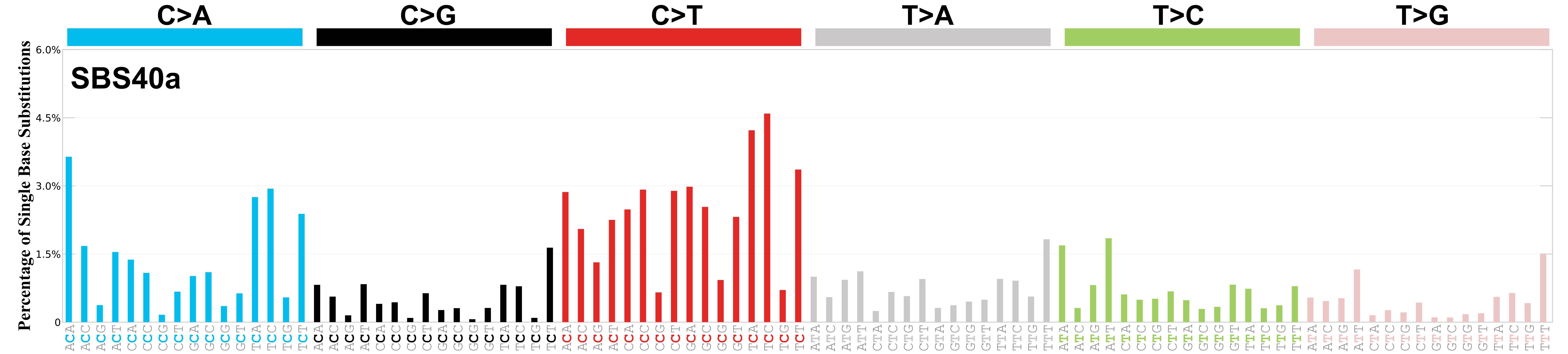
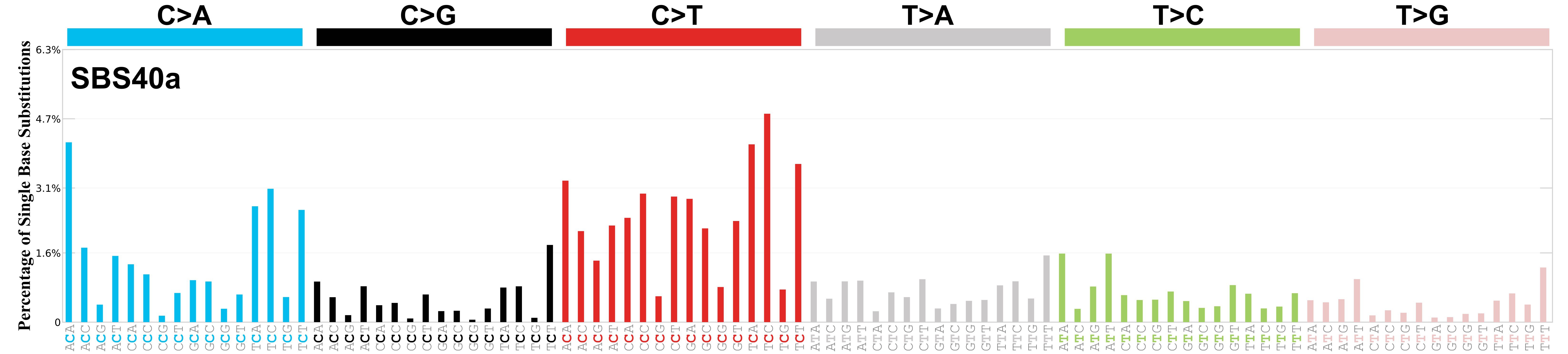
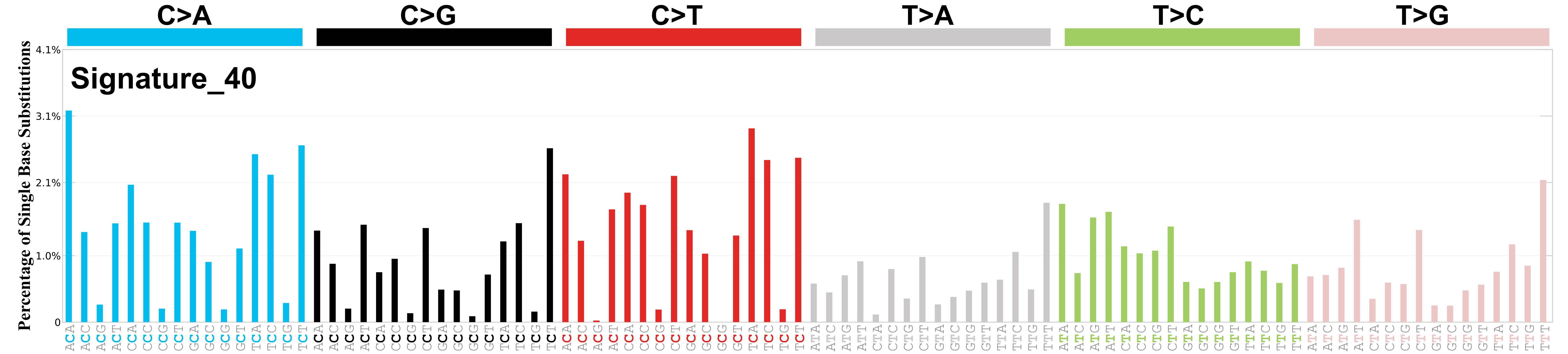
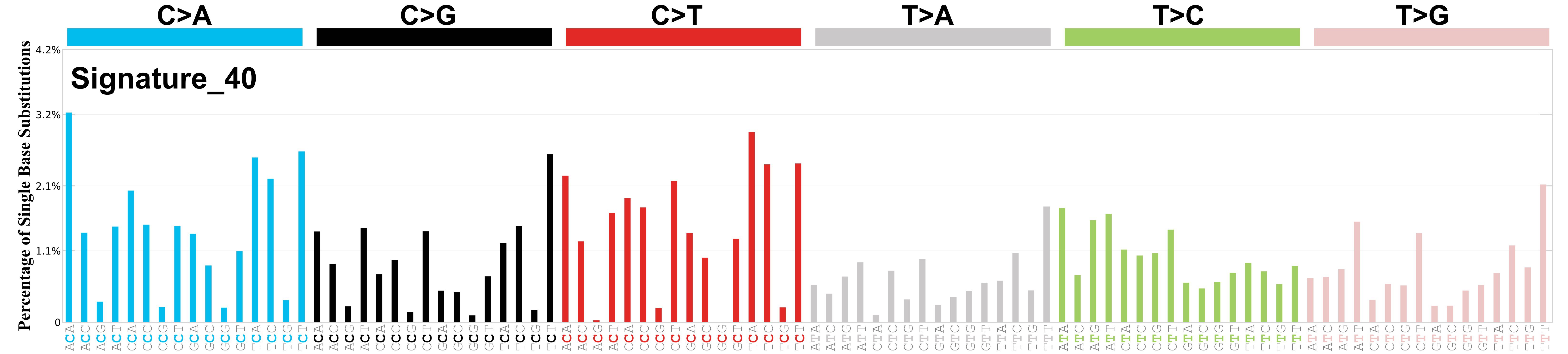
Mutational profile using the conventional 96 mutation type classification. This classification is based on the six substitution subtypes: C>A, C>G, C>T, T>A, T>C, and T>G, as well as the nucleotides immediately 5’ and 3’ to the mutation.
Each of the substitutions is referred to by the pyrimidine of the mutated Watson—Crick base pair. Incorporating information on the bases immediately 5’ and 3’ to each mutated base generates 96 possible mutation types (6 types of substitution x 4 types of 5’ base x 4 types of 3’ base). Mutational signatures are displayed and reported based on the observed trinucleotide frequency of the genome, i.e., representing the relative proportions of mutations generated by each signature based on the actual trinucleotide frequencies of the corresponding reference genome.
Proposed aetiology
Unknown.
Acceptance criteria
| Background | Identification study | First included in COSMIC | |
|---|---|---|---|
| Senkin et al. 2024 Nature | v3.4 | ||
| Identification | NGS technique | Different variant callers | Multiple sequencing centres |
| WGS | Yes | Yes | |
| Technical validation | Validated in orthogonal techniques | Replicated in additional studies | Extended context enrichment |
| Yes | No | - | |
| Proposed aetiology | Mutational process | Support | |
| Unknown | Unknown | ||
| Experimental validation | Experimental study | Species | |
| - | - | ||
Summary of the technical and experimental evidence available in the scientific literature regarding the validation of the mutational signature.
Tissue distribution
Identified in clear cell renal cell carcinomas, but can be attributed in many cancer types.
Differences between current and previous profiles

Genome: GRCh37

Genome: GRCh38

Genome: mm9

Genome: mm10
Genome: rn6
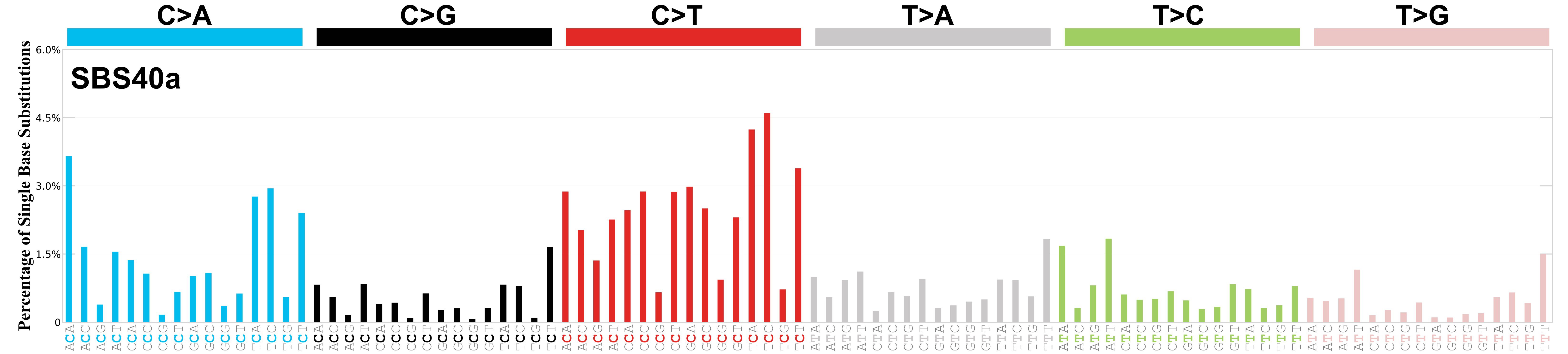
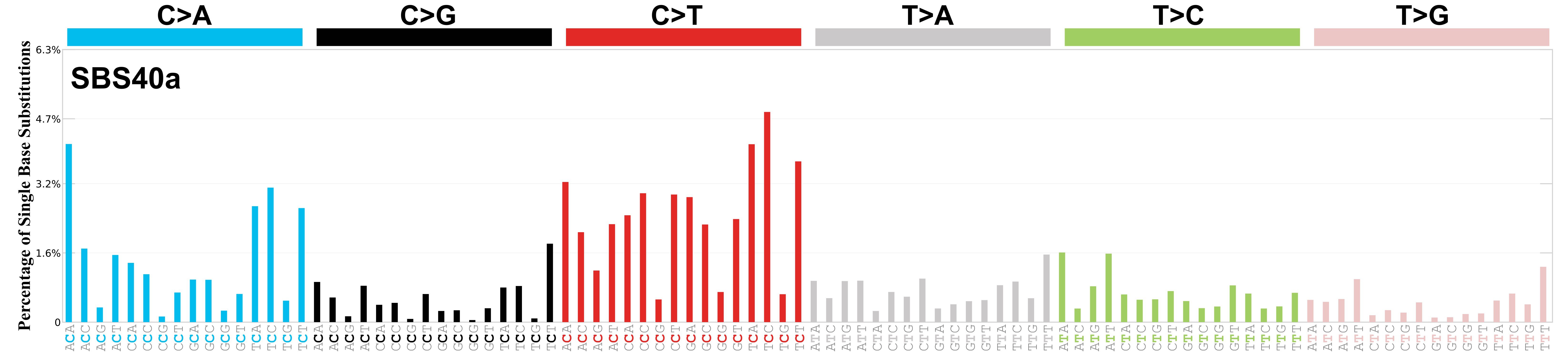
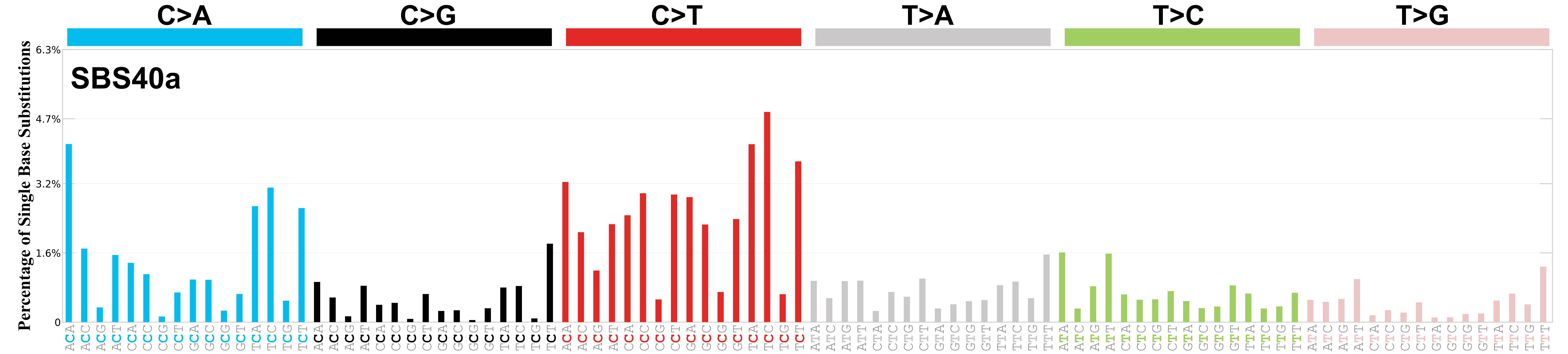
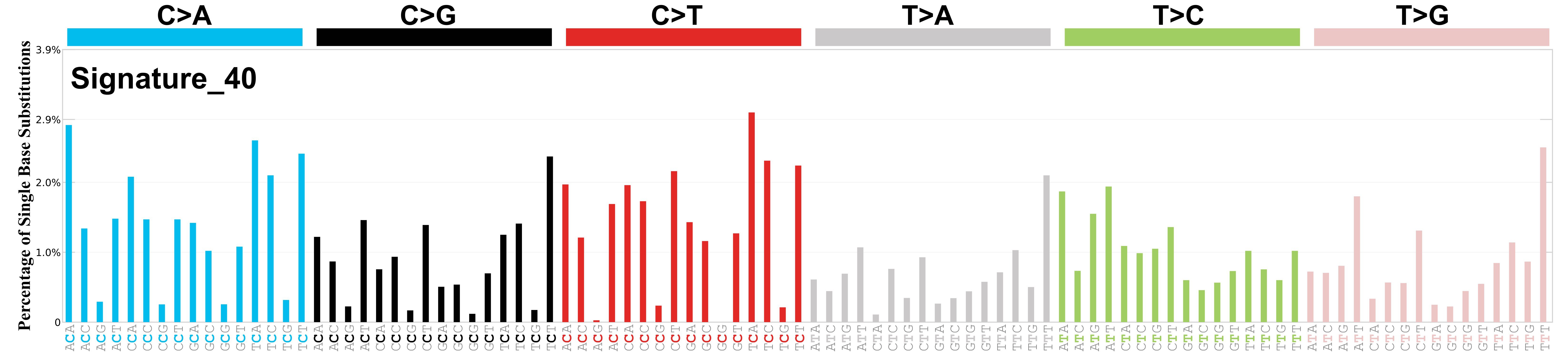
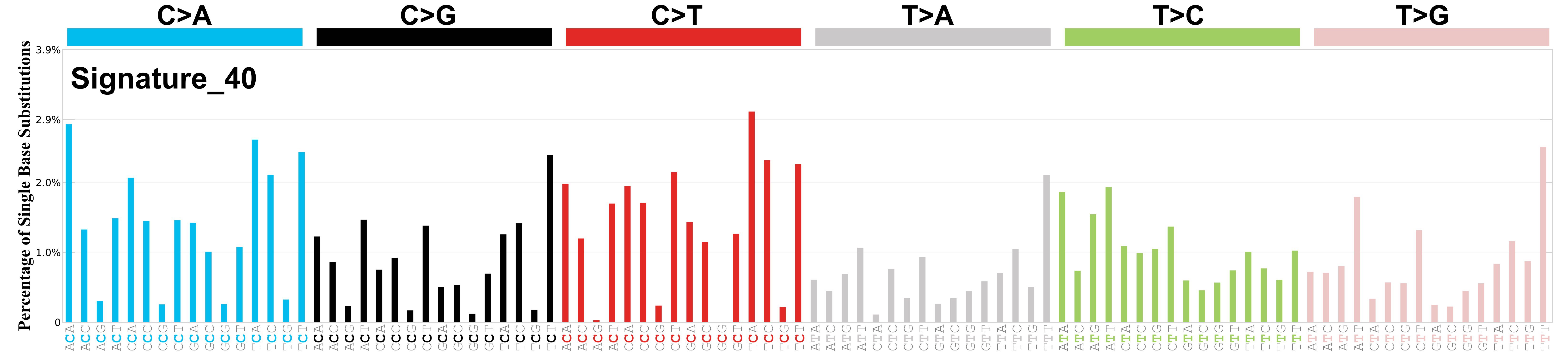
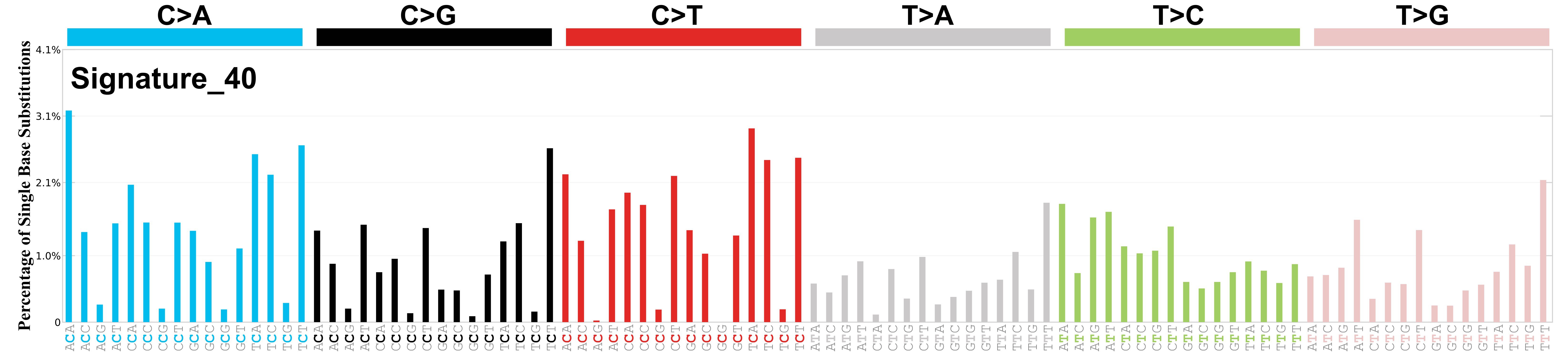
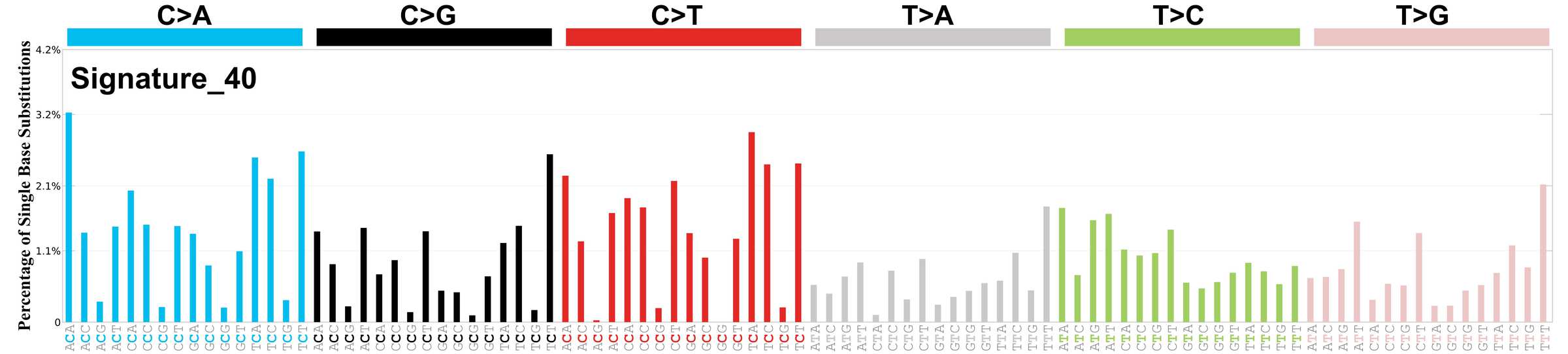
The analysis of a large number of clear cell renal cell carcinomas allowed the splitting of SBS40 into three distinct components. When combined SBS40a, SBS40b, and SBS40c recapitulate the prior SBS40 with a cosine similarity of 0.96. The cosine similarity between SBS40a and SBS40 is 0.91.